
…as AKIRS takes Sensitization to Traditional Rulers
Traditional rulers in Akwa Ibom State have unanimously endorsed and commended the federal government on the New Tax Reforms. Speaking onbehalf of the monarchs, the Oku Ibom Ibibio and President-General, Supreme Council of Traditional Rulers, Akwa Ibom State, His Eminence (Dr.) Solomon Etuk, CFR, also lauded the Akwa Ibom State Governor, Pastor Umo Eno, for the ongoing sensitization on the tax reforms, stating that it has created the needed awareness and prepared members of the public for the imminent implementation of the new reforms billed to take effect from January 1, 2026.
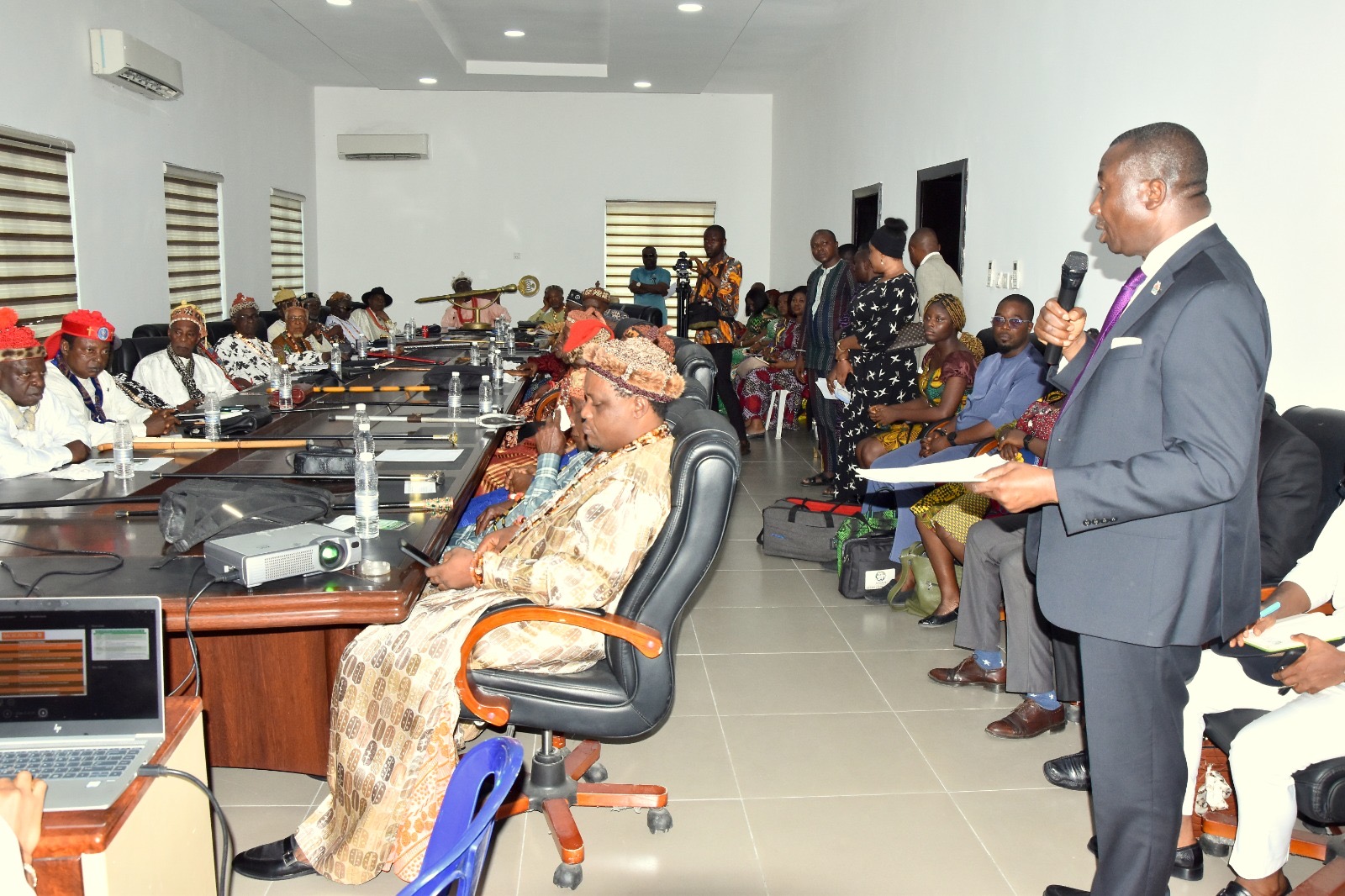
The monarch who is also the Chancellor of Akwa Ibom State University and the Paramount Ruler of Nsit Ubium Local Government Area, gave the commendation on Thursday, 18th December, 2025, at the Chambers of Akwa Ibom State Council of Chiefs, Wellington Bassey Way, Uyo, following an engagement with the Akwa Ibom State Internal Revenue Service (AKIRS) on new Tax Reforms, where paramount rulers from the 31 local government areas of the State were all physically present.
“We thank you for such robust package of enlightenment. You’ve been able to highlight some things we never knew about the new reforms. There should be no cause for alarm from members of the public. I belief strongly that the new reforms will bring great relief to Nigerians. We accept it. My message is, let’s all assist government to achieve positive results highlighted in the new tax reforms”, His Eminence said.
In his opening remarks, the Executive Chairman of Akwa Ibom State Internal Revenue Service (AKIRS), Sir Okon Okon, thanked the monarchs for identifying with the new Tax Reforms and also acknowledged the remarkable support and practical directives given to the Revenue Agency by the State Governor, Pastor Umo Eno, Ph.D, and the lofty achievements of the ARISE Agenda which he said have acted as morale booster to tax compliance by the citizenry. Highlighting the essence of the new tax reforms and the expected outcomes, the AKIRS boss noted that there was no need for anxiety over the tax reforms as it was deliberately designed to simplify the national tax system, check multiple taxation, and curtail the activities of non State actors and nuisance taxes. He noted that the new reforms will bring far-reaching relief to Nigerians, boost economic activities, and drive growth and development across the country.
According to the AKIRS’ boss who is a Member of the Presidential Committee on Fiscal Policy and Tax Reforms, the existing tax model which was rooted in colonial and archaic laws is characterized by fiscal imbalance, inconsistent tax framework across jurisdictions, and multiple tax identifiers that hindered compliance by individuals and corporate organizations. He noted that the new reforms have produced four new Tax Acts designed to streamline and consolidate tax administration in the country, namely, the Joint Revenue Board (JRB) Establishment Act 2025, which replaces the Joint Tax Board (JTB); the Nigeria Revenue Service (NRS) Establishment Act 2025, that replaces the Federal Inland Revenue Service (FIRS); the Nigeria Tax Administration Act (NTAA) 2025; and the Nigeria Tax Acts (NTA) 2025. These, he noted, come with great relief for many Nigerians, including low-income-friendly thresholds, personal income tax exemptions for those earning below one million naira annually; promotion of efficient, unified, and tech-driven tax administration; while basic services and commodities such as food, education, health, rents, transport, etc, will attract zero percent VAT.
These measures, Okon posited, will ease pressure on individuals and households, while the introduction of a national Tax Identification Number (TIN) will boost compliance and catalyse economic planning at both national and subnational levels.
Throwing more light on other implications and impact of the new tax regime,
Sir Okon, who is also a Fellow and Council Member of the Chartered Institute of Taxation of Nigeria (CITN), further listed other impact to sub-nationals and national governments to include improved IGR; more efficient revenue administration, seamless harmonization and collaboration with state systems and structures, removal of roadblocks for revenue collection and elimination of multiple taxation. He added that the new regime will boost State’s fiscal position as VAT formula has been revised from 50 percent to 55 percent; strengthen revenue administration and professionalism; eliminate consumption tax, offer improved business environment, and create employment opportunities.
Sir Okon observed that the ongoing engagement with critical stakeholders and diverse members of the public was, amongst other things, to tame anxiety, preview the objectives of the reforms, dispel misconceptions, and help taxpayers see the benefits, as well as seek collaboration with critical stakeholders in disseminating the right message. The Thursday engagement was one in continuation of the series of similar events already held with other critical stakeholders in Akwa Ibom State as has been scheduled to continue till greater number was reached with the message.